Unprecedented Victory of Serbian Ruling Parties
Who won the elections?
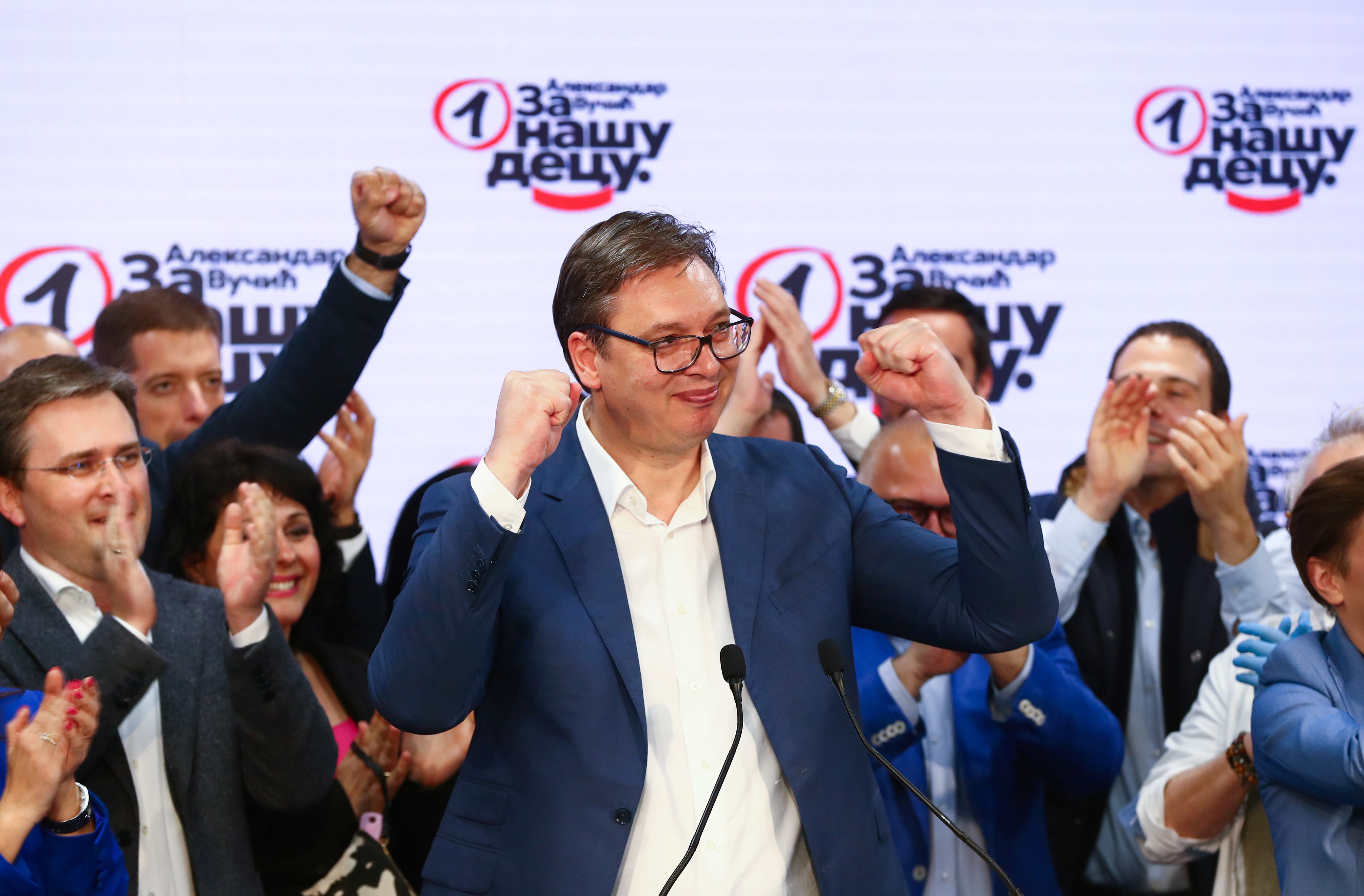
For the fourth time in a row, the ruling coalition of the national conservative SNS led by President Alexander Vučić and several small parties gathered around him won the elections. The SNS has been ruling since 2012. After counting most of the votes, SNS has 61.6% of the total, up from 48.3% in the 2016 election. It will hold 191 seats in the 250-member, unicameral National Assembly. The co-ruling Socialist Party of Serbia (SPS) and several smaller groups supporting it under the auspices of Foreign Minister Ivica Dačić won 10.4% of the vote, a slight drop from 11% in the last election, and will have 32 seats.
What parties will round out parliament?
The electoral threshold was lowered earlier this year from 5% to 3%. This enabled the debuting national-conservative Serbian Patriotic Alliance (SPAS) to cross it and receive 11 seats. The ultranationalist Serbian Radical Party did not have enough support, losing 22 mandates. Parliament will be supplemented by 16 deputies from four conservative and regional minority parties (Hungarian, Bosniak, and Albanian) that are not subject to the electoral threshold. For the first time since the democratic transition in Serbia in 2000, the election was boycotted by a majority of the parliamentary opposition composed of the coalition Alliance for Serbia and several smaller groups (38 seats in total). They point to the undemocratic practices of the authorities, for example, in the last presidential election, such as unequal access of candidates to media, the use of public funds for ruling party purposes, and pressure on employees of state institutions, all noted by the OSCE.
What do the election results mean for the government and the opposition?
The results mean the continuation of an SNS-SPS cabinet headed by Ana Brnabić. By re-forming the coalition, the government will have an unprecedented advantage—223 seats—and the support of almost all members of national minorities, compared to some dozen opposition parliamentarians. In fact, SPAS is not an alternative to the government because it holds SNS-like ideological views. This means no significant parliamentary debate will take place. In turn, the non-parliamentary opposition announced the boycott had succeeded in lowering voter turnout to 50%, the lowest in any election in Serbia so far. It claimed that SNS-SPS had lost its democratic legitimacy and called on the EU to mediate for fully free elections. The opposition’s demands likely will be strengthened by the OSCE report should it confirm the unacceptable practices revealed by voters on social media and in the few free media remaining.
What do the election results mean for foreign policy and European integration?
Serbia will continue its policy of promoting cooperation with Russia and China at the expense of integration with the EU. This is demonstrated by, among other things, the visit of Russian Foreign Minister Sergey Lavrov to Belgrade three days before the election or Vučić’s two-day visit to Moscow two days after the election and on the occasion of the postponed Victory Day celebrations, as well as election campaign advertisements indicating the role of China in technology and education development in Serbia. Despite declaring reforms for rapprochement with the EU, the slow pace of integration will persist. Six and a half years after the start of talks with the Union, Serbia has opened 18 of 35 negotiation chapters, of which only two have been closed preliminarily. Serbia will return to talks on settling relations with Kosovo, with the involvement of the U.S., which does not exclude the exchange of territory as a means of resolving the dispute. A meeting of presidents Vučić and Donald Trump on this matter is planned for 27 June in Washington.